
This is a new rule, and we’re all for it.
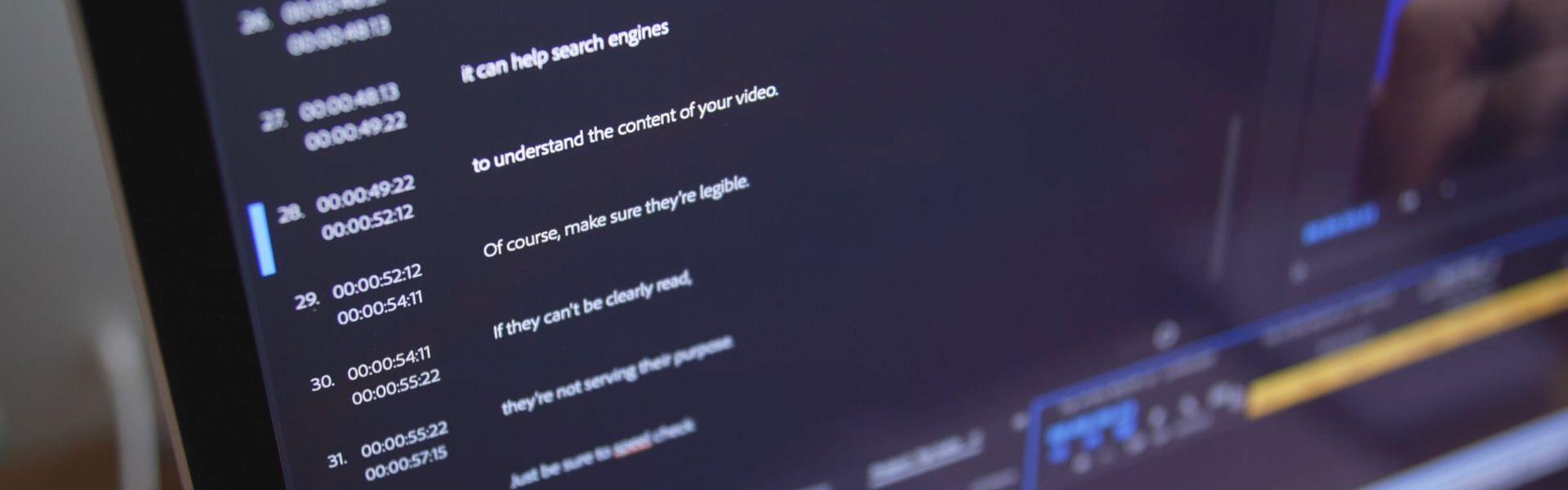
You’ve probably watched a video online where closed captions are shown on screen. Closed captions are often associated with subtitles, but there is a difference.
What’s the difference between closed captions and subtitles?
Subtitles typically transcribe spoken dialogue or narrative and are “burnt in” to the video whereas closed captions are optional to view and provide more information than subtitles - they display who’s speaking, what they’re saying, which sound effects are being used, and the tone of music being played. They assist in telling the full story.
We provided closed captions for Hampshire and Isle of Wight Air Ambulance’s video ‘Dale’s Story’. Here is an example of demonstrating sound effects, or non-spoken audio:

Closed captions can improve the viewing experience
In the UK, there are 18 million people who are deaf, have hearing loss or tinnitus. Hearing loss affects 1 in 3 adults*. That’s a significant portion of the British audience that aren’t necessarily getting the full viewing experience, because this rule doesn’t yet cover all broadcasting.
According to research by captioning charity Stagetext, four out of five viewers aged 18-25 said they use subtitles all or part of the time, despite having fewer hearing problems than older viewers.**.
So captions should be recognised as a preference as well as a requirement.
In the following image, there are two people primarily speaking in ‘Dale’s Story’, but both interviews are covered with b-roll footage. The video doesn’t always show who is speaking, so this caption informs us that it is Dale:

Should your videos have closed captions?
Even if you’re not in the market for a television advert, it’s the perfect opportunity to revisit your own brand rules and see how you can push forward with adding closed captions to your videos.
It’s worth noting that this may come with added cost as it’s additional work for your creative studio and for advertising organisation Clearcast. But your videos will be available to a wider audience therefore boosting engagement and increasing brand trust.
There of course is so much more that’s yet to happen in making video available to all, but this is a significant step in the right direction. With Channel 4 paving the way, it’s likely that other broadcasters will swiftly follow suit. This is your opportunity to be the spearhead in your industry’s video output by making your videos accessible for everyone - and get there before the rules do.
If you’re looking for a creative content agency who is experienced in providing closed captions for videos, get in touch today.
Sources:
*rnid.org.uk, as of Thursday 16 April 2026.
https://rnid.org.uk/get-involved/research-and-policy/facts-and-figures/prevalence-of-deafness-and-hearing-loss/